AI is moving past the hype phase. At Building Real AI, industry leaders shared practical lessons on scaling enterprise AI, moving beyond pilots, and turning foundation models into real business impact.
Building Real AI: From Foundation Models to Scalable Enterprise
Hosted on 11th February
AI has officially moved beyond experimentation. At Level39’s latest AI event, Building Real AI: From Foundation Models to Scalable Enterprise, the conversation shifted firmly from hype to reality – focusing on what it truly takes when scaling AI o deliver measurable business value, scale responsibly, and survive inside complex enterprise environments.
Bringing together founders, operators, technologists, investors and enterprise leaders, the evening unpacked the practical challenges of moving from proof of concept to production, and from generic foundation models to domain specific AI that customers actually trust and use.
A panel grounded in real-world experience
Moderated by Fractional COO & Growth and Operations Strategist Monia Ben Nejima, the panel brought together perspectives from across the AI ecosystem:
- Karen Zhang, Startups Lead & VC Partnerships, Google Cloud
- Sanjeev Gandhi, Co‑Founder & CEO, Val‑iQ AI
- Jean‑Philippe M.L. Schepens van Thiel, Founder & CEO, AxonJay.ai
- Liviu‑Marian Negrila, Director, The Agile Software Team
Rather than theoretical debates, the discussion centred on lessons learned from building, selling, deploying and scaling AI in highly regulated and enterprise-grade environments.
Key themes from the discussion
1. Moving beyond “cool demos” to real business value
One of the strongest messages of the night was that AI only matters insofar as it delivers tangible outcomes.
Karen highlighted that many startups fall into the trap of building technically impressive demos without a clear business owner or economic rationale. The AI projects that succeed are those linked directly to outcomes such as:
- Time saved in operational workflows
- Improved conversion or risk reduction
- Faster decision-making in back‑office and “unsexy” processes
As several panellists noted, some of the highest‑ROI AI use cases today aren’t flashy customer-facing tools, but internal systems like fraud detection, underwriting support, reporting automation and compliance workflows.
2. From foundation models to specialisation
While foundation models have lowered the barrier to entry, the panel was clear that the future belongs to specialised, domain‑aware AI.
Karen shared that more startups are now building on top of foundation models -abstracting them into highly specific applications for sectors like financial services, healthcare, pharma and legal. These industries demand contextual understanding, explainability and trust, which generic models alone cannot provide.
The consensus:
Foundation models get you started but specialisation is what creates defensibility and enterprise adoption.
3. The hard truth about POCs
Many attendees resonated with the discussion around stalled AI pilots. According to Sanjeev, the problem is not lack of model capability – it’s losing momentum.
At Val‑iQ AI, POCs are deliberately compressed into weeks, not months, with customers quickly accessing sandbox environments using their own data. The goal is to validate usefulness fast, without over‑engineering or endless experimentation.
Jean Philippe added a critical insight: enterprises adopt AI faster when they are involved early through co creation, rather than being handed a finished solution created in isolation – a key enabler when scaling AI beyond isolated pilots.
4. Data is still the hardest problem
Despite advances in LLMs and agents, the panel repeatedly returned to a familiar truth:
AI is only as good as the data behind it.
Liviu‑Marian emphasised that 80% of the real work happens before model training – understanding, cleaning, structuring and validating data. Many AI failures can be traced back to poor data foundations, unrealistic expectations, or skipping quality and governance steps early on.
5. Transparency, explainability and trust
In regulated industries, compliance is not optional – it’s the first conversation.
Sanjeev stressed that if you cannot show auditability, traceability and documented decision logic, enterprise buyers simply won’t engage. Jean‑Philippe reinforced the importance of “transparent AI”, where users can understand why a model produced a recommendation and where the underlying signals came from.
A recurring recommendation across the panel was to:
- Build human‑in‑the‑loop systems
- Break complex systems into multiple interacting agents rather than one monolithic model
- Design AI architectures that are observable, explainable and adaptable to change
These principles not only reduce risk but also increase long‑term adoption and trust.
Practical takeaways for builders and leaders
Across the discussion, several clear takeaways emerged for anyone building or scaling AI today:
- Start with frustration, not technology: Identify where teams are struggling most – that’s often where AI can deliver the fastest value.
- Treat the business case as a live document: Assumptions change. Revisit both qualitative and quantitative value regularly.
- Shrink the POC phase: Move quickly from pilot to real usage with customer data to avoid losing momentum.
- Design for change: Modular, pluggable architectures matter in a volatile market.
- Build governance in from day one: Documentation, transparency and traceability unlock enterprise trust.
- Co‑create relentlessly: AI systems succeed when customers help shape them, not just consume them.
From hype to reality
The evening closed with a clear message: we are past the hype phase of AI. The winners won’t be those who chase the latest model release, but those who understand their users, respect the constraints of real businesses, and build AI systems that evolve alongside customers and markets.
As Level39 continues its AI event series, this session set a strong benchmark for grounded, honest conversations about what it really takes to build AI that lasts.
If you missed it, or found yourself nodding along, the next step is simple: take one insight from the discussion and apply it to your product, process or team in the next 30-90 days. That’s where “real AI” begins.

Inside Level39: July Edition
30th April 2026
Level39 Member Highlights: July Edition
30th April 2026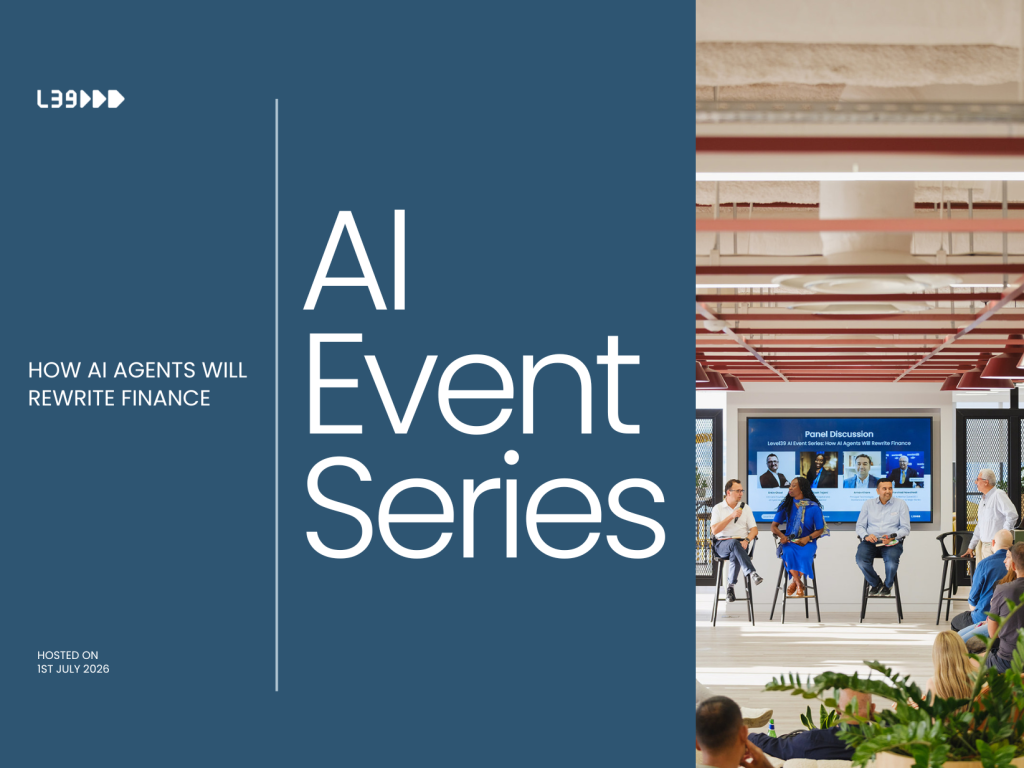
How AI Agents Will Rewrite Finance
30th April 2026
Inside Level39: June Edition
30th April 2026
Level39 Member Highlights: June Edition
30th April 2026
Inside Level39: May Edition
30th April 2026
Level39 Member Highlights: May Edition
30th April 2026
Inside Level39: April Edition
30th April 2026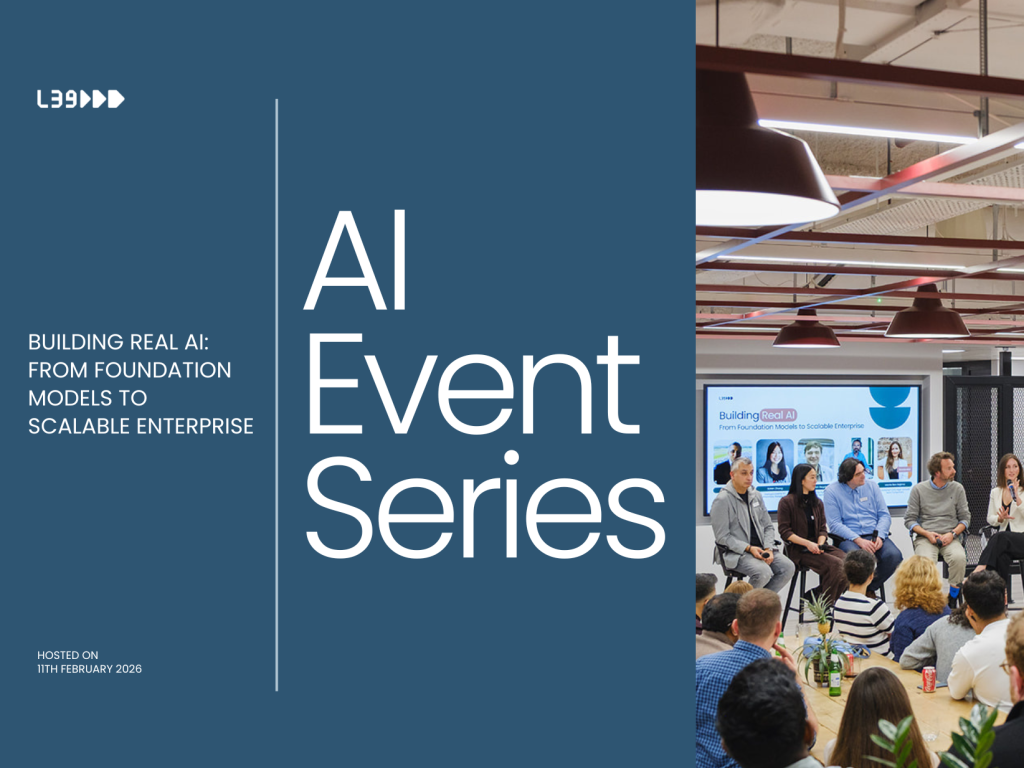
Building Real AI: From Foundation Models to Scalable Enterprise
30th April 2026